At Wadi Al Safa Medical Center, we understand that getting a tooth extracted can feel overwhelming and even intimidating for many patients. Whether you are scheduled for a wisdom tooth extraction or another type of dental extraction, knowing how to take care of your mouth afterwards is essential for a smooth and fast recovery. Most complications we see, such as infections or dry socket, happen when the protective blood clot gets disturbed, usually within the first 48 hours. Drawing from our daily experience treating simple and complex extractions, we’ve put together 10 critical things you must avoid after a tooth extraction. These evidence-based guidelines will speed up healing at the extraction site and help you get back to your routine comfortably and safely.

1. Don’t Smoke (Cigarettes or Vape)
Smoking after tooth extraction is one of the most harmful things you can do. The chemicals from cigarettes and the heat from the smoke irritate the extraction site and delay tissue healing. Plus, the suction action when inhaling can pull the blood clot out of the socket, dramatically increasing the risk of dry socket.
Why you should avoid it:
- Smoking after a tooth extraction can reduce saliva in the mouth, slowing healing and increasing infection risk
- Interferes with the blood supply needed for healing
- Contains chemicals that slow down tissue repair
- Suction effect dislodges the clot
Instead:
Avoid smoking and vaping completely for at least 72 hours, but ideally 5-7 days, as the risk of dry socket remains high during the first week.

2. Don’t Use a Straw for Drinking
Using a straw creates a suction force inside your mouth. This pressure can easily pull the blood clot out of the socket and expose the bone. This leads to dry socket, a painful condition that may cause radiating jaw and ear pain, which can delay healing.
Why you should avoid it:
- Suction can dislodge the clot
- Increases the risk of dry socket
- Slows down healing
Instead:
Drink normally from a glass or cup. Avoid straws for 7–10 days to ensure proper clot stability and prevent complications
3. Don’t Spit Forcefully or Rinse Your Mouth Too Soon
Many people instinctively rinse their mouths after dental procedures, thinking it cleans the area. But rinsing too early or spitting too forcefully can disturb or dislodge the blood clot, delaying healing and increasing the risk of dry socket. The vacuum pressure created when spitting is enough to open the wound or cause bleeding.
Why you should avoid it:
- Dislodges the blood clot
- May cause bleeding
- Can reopen the wound and increase infection risk.
Instead:
Do not rinse for the first 24 hours. After that, use gentle saltwater rinses, tilt your head and let the water fall out rather than spitting forcefully to protect the clot.
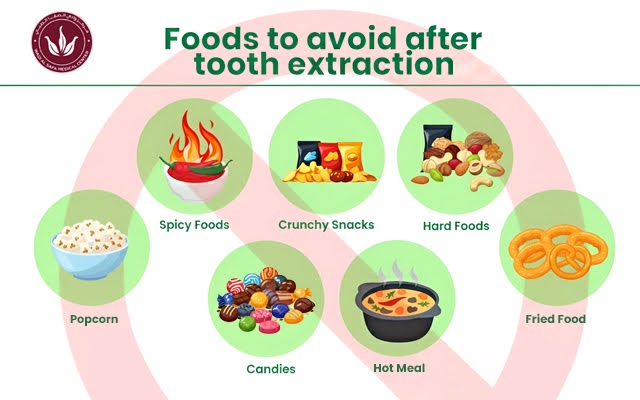
4. Don’t Eat Hot Foods or Drink Hot Beverages
Heat is one of the main factors that can disturb healing after a tooth extraction. Hot foods and beverages can dissolve or dislodge the blood clot inside the socket and can increase blood flow, causing bleeding. Since your mouth remains numb for a while after the procedure, you may not feel how hot something is, putting you at risk of burning your gums or tongue, and disturbing the blood clot.
Why you should avoid it:
- Dislodges or dissolves the blood clot
- Increases bleeding
- May burn the numb oral tissues
- Delays healing and increases the risk of complications like dry socket
Instead:
Choose lukewarm, cold, or room-temperature foods for at least the first 24–48 hours. Cold foods like yoghurt or ice cream can also help reduce swelling.
5. Don’t Eat Hard, Sticky, Crunchy, or Spicy Foods
Your mouth needs time to recover, and hard or irritating foods can damage the extraction site or disturb stitches. Chips, nuts, popcorn, fried snacks, seeds, candies, and spicy foods can get stuck in the socket or irritate the wound. Sticky foods like caramel and chewy sweets can pull on the stitches and delay healing.
Why you should avoid it:
- Food particles can enter the socket
- May cause inflammation
- May disturb stitches
- Can trigger pain or swelling
Instead:
Stick to soft foods like yoghurt, smoothies (without straws), mashed potatoes, scrambled eggs, porridge, bananas, and lukewarm soups. Avoid foods that require chewing on the extraction side or could stick to the wound.
6. Don’t Chew on the Side of the Extraction
Chewing food on the extraction side can irritate the wound, push food particles into the socket, and trigger pain and inflammation. Since the tissues are sensitive and the wound is fresh, even soft foods may cause discomfort if direct pressure is applied.
Why you should avoid it:
- Increases irritation
- Pushes food into the socket
- Can cause bleeding
- Risk of dry socket or infection
Instead:
Eat soft foods and chew on the opposite side of your mouth for at least three to four days. Avoid hard, sticky, or crunchy foods near the extraction site during this period
7. Don’t Drink Alcohol
Alcohol may seem harmless, but it impairs blood clot formation and delays tissue healing. And interfere with pain medications and antibiotics.
Why you should avoid it:
- Thins the blood, increasing bleeding and dry socket risk
- Irritates gum tissues
- Slows tissue healing and increases infection risk
- Interferes with medications
Instead:
Drink plenty of water, fresh juices (without straws), hydrating drinks and clear soups. Avoid alcohol while taking prescribed painkillers or antibiotics
8. Don’t Brush Directly Over the Extraction Site
Oral hygiene is important, but brushing directly over the socket can reopen the wound, disturb stitches or remove the blood clot. The bristles may irritate the sensitive tissue and delay healing.
Why you should avoid it:
- Can damage or dislodge the blood clot
- Risk of bleeding
- Irritates healing tissue and slows recovery
Instead:
Brush the rest of your mouth normally, but avoid the extraction area for 24 hours. After that, brush gently around the extraction site without applying direct pressure on the wound
9. Don’t Exercise or Do Any Strenuous Physical Activity
Anything that raises your heart rate can increase blood pressure and disturb blood clotting, leading to bleeding from the extraction site. Intense workouts, running, weightlifting, or even heavy household chores can slow down healing and increase pain.
Why you should avoid it:
- Higher risk of bleeding
- Increased throbbing pain
- Blood clot may dislodge
- Delayed healing
Instead:
Rest as much as possible. Avoid heavy exercise for 48–72 hours, and ease back into workouts slowly. Light walking is fine, but anything that significantly raises your heart rate should be avoided during the first few days.
10. Don’t Ignore Warning Signs – Get Professional Help Right Away
According to the Dubai Health Authority (DHA), patients should watch for possible complications after a tooth extraction, including pain, swelling, bruising, bleeding, bad breath, dry socket, or infection. While some discomfort, swelling, and minor bleeding are normal, certain symptoms are red flags that require immediate attention to prevent serious complications. Ignoring them may lead to serious problems like infection or dry socket, which can delay healing or require more complex treatment. Book an appointment if you observe these warning signs
- Severe pain persists after 72 hours
- Continuous or increasing bleeding
- Bad smell or taste from the extraction site
- Pus or yellow discharge
- High fever
- Swelling that worsens instead of improving
- Radiating pain to the ear or jaw
Additional Tips for Faster Healing
To support your recovery, follow these tips alongside the “must-not-do” list:
- Apply ice packs for the first 24 hours to reduce swelling
- Keep your head elevated, especially during sleep, to minimise bleeding
- Take all prescribed medications exactly as instructed
- Rest adequately and avoid unnecessary movement for the first couple of days
- Begin gentle saltwater rinses after 24 hours to keep the area clean
- Stay well-hydrated to support overall healing
Get In Touch To Find Out More
At Wadi Al Safa Medical Centre, a trusted dental clinic in Dubailand, your comfort and a smooth recovery are our top priorities. These guidelines are designed to help ensure proper healing after your tooth extraction. While they provide comprehensive advice, please remember that each case is unique, and your specific needs may require additional or modified instructions depending on the complexity of your extraction and your overall health.
If you have any concerns during your recovery or wish to schedule an appointment, don’t hesitate to reach out. Our dental team responds to post-extraction concerns every day, so never hesitate to ask, even if you feel unsure. Early guidance prevents complications. For more information about our dental services in Dubai, reach out to us directly. At Wadi Al Safa Medical Centre, your oral health is our commitment, and we aim to combine evidence-based dentistry with patient comfort at every step of your treatment.
Frequently Asked Questions About Tooth Extraction
1. How long after wisdom teeth removal can I use a straw?
Avoid using a straw for at least 7 days to prevent dislodging the blood clot. Using one too early can cause a painful dry socket.
2. How long does it take for a tooth extraction to heal?
Initial healing takes 7–10 days, while full gum recovery can take up to 2 weeks. Deeper bone healing continues for several weeks to months.
3. 48 hours after tooth extraction can I smoke?
No, wait at least 72 hours, but ideally a full week before smoking. Smoking too soon delays healing and increases the risk of dry socket.
4. How to relieve pain after tooth extraction?
Use pain medications, apply ice packs, and stick to soft foods. Avoid smoking, hot foods, and keep your head elevated for relief.
5. Can you brush your teeth after wisdom teeth removal?
Yes, but avoid the extraction site for the first 24 hours. Brush gently around the area after a day, without touching the socket.